 Sofia Bauer
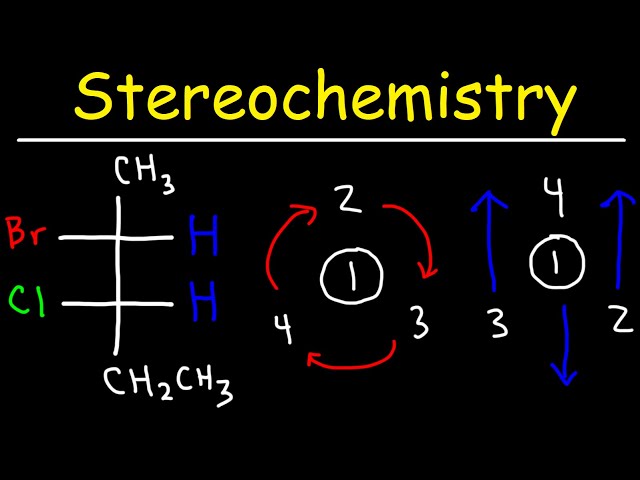
Optically inactive Fisher projections are representations of molecules that do not exhibit optical activity, meaning they do not rotate plane-polarized light. They are useful for visualizing the three-dimensional structure of molecules and understanding their chemical and physical properties.
Fisher projections are two-dimensional representations of three-dimensional molecules. They are drawn on a plane with the horizontal axis representing the x-axis and the vertical axis representing the y-axis. The carbon atoms in the molecule are represented by the intersection of the x- and y-axes, and the other atoms are attached to the carbon atoms by lines. The orientation of the lines indicates the relative positions of the atoms in three-dimensional space.
Examples of Optically Inactive Fisher Projections
There are several ways to create optically inactive Fisher projections. One common method is to start with a molecule that has a plane of symmetry. A plane of symmetry is a plane that divides the molecule into two mirror-image halves. If a molecule has a plane of symmetry, then its Fisher projection will be optically inactive.
- Meso compounds: Meso compounds are molecules that have an internal plane of symmetry. This means that the molecule can be divided into two mirror-image halves. As a result, meso compounds are optically inactive.
- Racemic mixtures: Racemic mixtures are mixtures of two enantiomers in equal proportions. Enantiomers are mirror-image isomers of each other. When enantiomers are mixed in equal proportions, the mixture is optically inactive.
- Compounds with a center of symmetry: Compounds with a center of symmetry are molecules that have a point around which the molecule can be rotated by 180 degrees and look the same. This means that the molecule has no net chirality and is optically inactive.
Tips for Creating Optically Inactive Fisher Projections
Here are some tips for creating optically inactive Fisher projections:
Tip 1: Identify the plane of symmetry in the molecule. If the molecule has a plane of symmetry, then its Fisher projection will be optically inactive.
Tip 2: Draw the Fisher projection of the molecule so that the plane of symmetry is parallel to the plane of the paper.
Tip 3: Label the atoms in the Fisher projection so that they correspond to the atoms in the three-dimensional molecule.
Frequently Asked Questions
Here are some frequently asked questions about optically inactive Fisher projections:
Q: What is an optically inactive Fisher projection?
A: An optically inactive Fisher projection is a representation of a molecule that does not exhibit optical activity.
Q: How do you create an optically inactive Fisher projection?
A: There are several ways to create an optically inactive Fisher projection. One common method is to start with a molecule that has a plane of symmetry.
Q: What are the benefits of using optically inactive Fisher projections?
A: Optically inactive Fisher projections can be used to visualize the three-dimensional structure of molecules and understand their chemical and physical properties.
Optically inactive Fisher projections are a valuable tool for chemists. They can be used to visualize the three-dimensional structure of molecules and understand their chemical and physical properties. By following the tips and guidelines above, you can create accurate and informative optically inactive Fisher projections.
Youtube Video: